Why James Hardie HZ10 Fiber Cement is the Best Siding for Pacific Beach Salt Air: 50-Year Lifespan vs Stucco Cost Comparison 2026
When you're building or remodeling a home in Pacific Beach, La Jolla, or Mission Beach, your choice of siding material isn't just about aesthetics—it's about long-term survival in one of California's most demanding coastal environments. Between the relentless marine layer that blankets our neighborhoods 85 days per year, salt spray that corrodes unprotected materials within months, and UV index readings that spike to 10.5 (extreme) during summer months, conventional siding materials face a brutal test. James Hardie HZ10 fiber cement siding delivers unmatched 50-year coastal durability with $75,890 savings vs stucco over 50 years.
When you're building or remodeling a home in Pacific Beach, La Jolla, or Mission Beach, your choice of siding material isn't just about aesthetics—it's about long-term survival in one of California's most demanding coastal environments. Between the relentless marine layer that blankets our neighborhoods 85 days per year, salt spray that corrodes unprotected materials within months, and UV index readings that spike to 10.5 (extreme) during summer months, conventional siding materials face a brutal test. That's why an increasing number of informed coastal homeowners working with Pacific Beach Builder are turning to James Hardie HZ10 fiber cement siding, a material specifically engineered for the unique challenges of humid coastal climates.
Understanding Pacific Beach's Unique Coastal Construction Challenges
Pacific Beach, Mission Beach, La Jolla, Bird Rock, and the Tourmaline Surfing Park area—all part of San Diego County's coastal communities—share a distinctive microclimate that creates exceptional demands on exterior building materials. The morning marine layer—that characteristic fog that locals know as "May Gray" and "June Gloom"—forms when cool, moist air from the Pacific Ocean collides with warmer inland air. This phenomenon occurs approximately 85-100 days per year, primarily from May through August, depositing moisture on every exterior surface. Bird Rock's clifftop properties face particularly challenging conditions, where the neighborhood's distinctive craftsman and cottage-style homes are exposed to elevated salt spray levels from their proximity to rocky shorelines, making material selection even more critical for long-term durability.
But moisture is just the beginning. Salt spray from breaking waves carries microscopic salt particles that travel surprisingly far inland. Research shows that salt spray is most concentrated within 300 to 3,000 feet of the shoreline, but accelerated corrosion rates have been documented as far as 5 to 10 miles inland. For homes in Pacific Beach and Mission Beach—where many properties sit within blocks of the ocean—salt air corrosion is a constant threat that weakens pipes, corrodes metal fasteners, degrades stucco and wood, and deteriorates paints and finishes.
Add to this San Diego's intense UV exposure. The UV index in coastal San Diego peaks at 10.5 during summer months, with readings consistently in the "very high" to "extreme" range from March through September. Materials that aren't engineered for UV resistance fade, crack, and become brittle over time. This combination—moisture cycling from marine layer, salt air corrosion, and extreme UV exposure—creates what engineers call an "extremely aggressive corrosion category" for buildings within 250 feet of the ocean. Our coastal construction services specifically address these unique San Diego challenges.
What Makes James Hardie HZ10 Different: Enhanced Moisture Resistance for Coastal Climates

James Hardie's HardieZone System recognizes that not all climates are equal. While standard fiber cement products perform well in moderate conditions, coastal California demands something more. That's where HZ10 comes in.
HZ10 is James Hardie's designation for products engineered specifically for high-heat, high-humidity coastal environments. The formulation includes enhanced moisture resistance properties that allow the material to withstand humidity, temperature cycling, and UV exposure that would damage standard products. Made from sand, cement, and cellulose fibers, the composition is fine-tuned to resist the cracking, swelling, and rotting that affect other materials in these challenging environments.
The enhanced moisture resistance is critical for Pacific Beach homes. When marine layer moisture condenses on your home's exterior in the early morning, then evaporates under intense afternoon sun, this moisture cycling creates expansion and contraction stresses. Standard materials—particularly stucco—develop cracks from this constant movement. HZ10's engineered formulation handles these cycles without degradation.
HZ10 products are specifically approved for installation in coastal Washington, Oregon, and designated regions of California. The geographic restrictions ensure that HZ10's enhanced formulation goes to the climates where it's actually needed. For Pacific Beach homeowners, this means you're getting a product designed for exactly the conditions your home faces.
Class A Fire Rating: Non-Combustible Protection

Fire protection is another critical consideration for coastal canyon properties. James Hardie HZ10 achieves a Class A fire rating under ASTM E84 testing standards—the Steiner Tunnel Test that measures flame spread and smoke development. To earn a Class A rating, materials must demonstrate a flame spread index of 25 or lower and smoke development not exceeding 450.
Fiber-cement board serves as the calibration standard in ASTM E84 testing with an index of 0, meaning it's essentially the benchmark against which other materials are measured. While Class A materials can still burn under extreme heat or prolonged exposure, they significantly limit flame spread—a crucial factor in wildland-urban interface areas like the coastal canyons near Pacific Beach.
This fire rating translates to real insurance savings. California's "Safer from Wildfires" program, established under Section 2644.9 of the California Code of Regulations, requires insurance companies to offer discounts for homes with Class A fire-rated materials. Research shows that replacing combustible materials with Class A fire-rated options like fiber cement can reduce insurance premiums by 10-20% in San Diego County and coastal California, with some homeowners seeing discounts up to 14.5% when combined with other mitigation measures like defensible space maintenance.
For a typical Pacific Beach home with annual insurance premiums of $1,800-$2,400, this translates to $180-$480 in annual savings, or $9,000-$24,000 over 50 years—enough to offset a significant portion of the material's premium cost.
Total Cost of Ownership Analysis: 50-Year Financial Comparison
The conversation about siding materials often begins and ends with installation cost. But that's a mistake that can cost Pacific Beach homeowners tens of thousands of dollars. The real question isn't "what costs less to install?" but rather "what costs less over the life of my home?"
Installation Cost Comparison (2026 Pricing)
| Material | Cost Per Square Foot (Installed) | Typical 2,000 Sq Ft Home |
|---|---|---|
| Vinyl Siding | $4.50 - $8.20 | $9,000 - $16,400 |
| Stucco | $9.30 - $16.90 | $18,600 - $33,800 |
| Standard Fiber Cement | $5.00 - $14.00 | $10,000 - $28,000 |
| James Hardie HZ10 | $8.92 - $14.69 | $17,840 - $29,380 |

At first glance, vinyl appears to be the clear winner, with stucco and HZ10 costing significantly more. But installation cost is just the beginning of the story. The real costs emerge over decades of ownership.
Maintenance Cost Reality Over 50 Years
Stucco: While stucco offers good initial aesthetics, coastal California environments are brutal on this material. Stucco requires repainting every 5-10 years at $8,000-$15,000 per cycle due to UV fading and salt air degradation. Over 50 years, that's 6-7 repainting cycles. Coastal moisture and salt air also cause crack development every 3-5 years requiring $500-$3,000 in repairs. More seriously, moisture intrusion—particularly common where stucco meets windows, doors, and roof lines—can cause $3,000-$12,000 in remediation costs. The importance of proper sealing cannot be overstated for San Diego stucco, as coastal moisture and UV exposure will break down unsealed or poorly sealed stucco over time.
50-Year Stucco Total: Initial installation ($26,000 average) + 6 repainting cycles ($60,000) + crack repairs every 3-5 years ($15,000 total) + moisture damage remediation ($8,000 average) = $109,000
Vinyl Siding: Vinyl's low initial cost is appealing, but coastal environments accelerate its deterioration. UV degradation in San Diego's intense sun causes fading and brittleness within 10-15 years. Salt air accelerates brittleness and cracking. The result is a 20-30 year lifespan requiring complete replacement. Over 50 years, you're looking at two full replacements. While vinyl doesn't require painting, brittleness and cracking necessitate ongoing repairs.
50-Year Vinyl Total: Initial installation ($12,700 average) + 2 full replacements at 20 and 40 years ($25,400) + repairs for brittleness and cracking ($8,000 total) = $46,100
Standard Fiber Cement: Standard fiber cement offers much better durability with a 40-50 year lifespan, but it's not optimized for coastal moisture like HZ10. In marine layer environments, standard fiber cement requires more frequent maintenance and may not qualify for the full 30-year warranty in extreme coastal zones. Repainting every 10-15 years is typical, though not always required if you're satisfied with the appearance.
50-Year Standard Fiber Cement Total: Initial installation ($19,000 average) + 2-3 repainting cycles if desired ($16,000-$24,000) + minor repairs ($4,000 total) = $39,000-$47,000
James Hardie HZ10: HZ10's enhanced coastal formulation delivers a true 50-year lifespan when properly installed. The material requires minimal maintenance: annual washing (DIY or $200-$300 professional service) and optional repainting every 15-20 years if you want to refresh the appearance. Critically, there are no rot repairs, no crack repairs, no moisture remediation, and no fire damage over the material's lifespan. The 30-year transferable warranty provides peace of mind and increases resale value.
50-Year HZ10 Total: Initial installation ($23,610 average) + optional repainting 2-3 times ($16,000 if desired) + annual washing ($10,000 over 50 years if professional, or DIY for minimal cost) = $49,610
But wait—add insurance savings: Class A fire rating reduces annual premiums by $180-$480 per year. Over 50 years, that's $9,000-$24,000 in savings.
Net 50-Year HZ10 Total: $49,610 - $16,500 (average insurance savings) = $33,110
The Financial Winner: HZ10 Saves $75,890 vs Stucco Over 50 Years
When you account for all costs—installation, maintenance, repairs, replacements, and insurance—the financial picture becomes crystal clear:
- Stucco: $109,000 (most expensive)
- Standard Fiber Cement: $39,000-$47,000
- Vinyl: $46,100
- James Hardie HZ10: $33,110 (least expensive)
HZ10 saves Pacific Beach homeowners approximately $75,890 compared to stucco and $12,990 compared to vinyl over 50 years—all while delivering superior aesthetics, better fire protection, and higher resale value.
Installation Requirements: Why Certified Installers Matter
James Hardie's 30-year warranty isn't automatic—it requires installation by certified contractors following specific guidelines. When HZ10 is installed without meeting manufacturer requirements, the homeowner's warranty is void. Given that we're talking about a material expected to last 50 years, proper installation is critical.
James Hardie Certification Requirements
To become a James Hardie Certified Installer, contractors must complete comprehensive training at James Hardie facilities, pass rigorous testing, maintain ongoing inspections and quality control, be professionally licensed and fully bonded, carry workers' compensation insurance and maintain liability insurance of at least $1,000,000 per occurrence, and maintain a "Likely to Recommend" score of at least 90% on third-party customer satisfaction surveys.
Elite Preferred Contractors—the highest level of certification—must follow hundreds of stringent installation guidelines to qualify for James Hardie's top-tier 30-year limited warranty.
Critical Installation Details for Coastal Warranty Compliance
Water Management: Proper installation requires a moisture barrier over sheathing to prevent water infiltration, with specific flashing details including Z-flashing at horizontal seams and butt joint flashing behind vertical seams. Kick-out flashing at roof-to-wall intersections is essential to redirect water away from the wall—without it, roof runoff can concentrate behind siding and quietly rot sheathing. There must be at least a 1-inch gap between siding and flashing at all flashing locations, with siding kept at least 6 inches above grade and 2 inches from roof surfaces to prevent moisture wicking.
Fastening Requirements: HZ10 must be nailed directly to studs with nail penetration into solid wood of 1 to 1-1/4 inches using hot-dipped galvanized or stainless-steel siding nails. In coastal environments, stainless-steel fasteners are strongly recommended to prevent fastener failure from salt air corrosion. Pre-drilling is required within 1/4 inch of an edge to avoid cracking. Critically, nails must be driven flush with the surface—overdriving can cause the material to shatter around the nail, weakening its holding power and voiding the warranty.
Drainage Plane: When installed with a proper drainage plane (house wrap) and the right flashing, HZ10 becomes the best defense against rain, snow, and humidity. This seemingly minor detail makes the difference between a siding system that lasts 50 years and one that fails in 15. For San Diego County coastal zone properties, installations must also comply with local building permit requirements and coastal zone construction standards, which often mandate enhanced weather-resistant barriers and special inspections to ensure long-term performance in marine environments.

For Pacific Beach homeowners, the lesson is clear: choosing HZ10 is only half the battle. Selecting a certified installer who understands coastal-specific requirements is equally important. The premium you pay for certified installation—typically 10-15% more than uncertified contractors—is insurance that protects your investment and preserves your warranty.
The 2026 Coastal Organic Modernism Trend: Why Aesthetics Matter
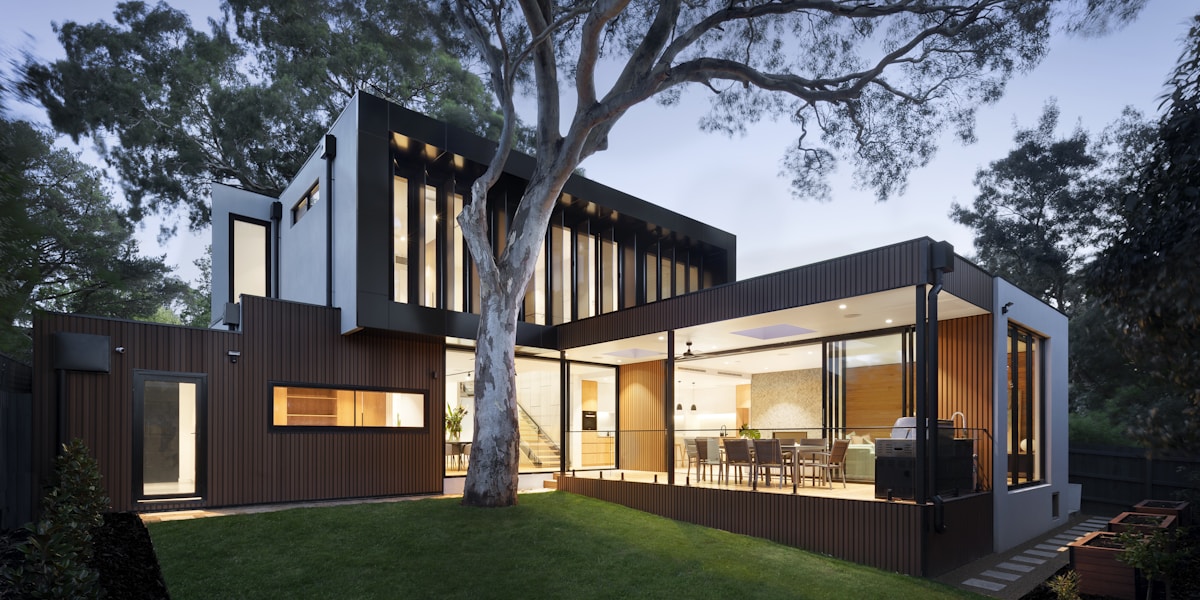
Beyond performance and cost, 2026's defining design movement—Coastal Organic Modernism—is accelerating the shift from stucco to fiber cement in beach communities. This architectural trend merges minimalist architecture with organic coastal warmth, emphasizing open layouts, sustainable materials, and light-driven design.
Coastal Modernism focuses on texture, tone, and structural calm, moving away from the decorative motifs and color-heavy approach of traditional coastal style. The aesthetic calls for tactile finishes like limewash walls, microcement surfaces, and natural materials that celebrate imperfection and authenticity. Fiber cement siding fits perfectly into this design language.
The versatility of fiber cement is particularly appealing for 2026 trends. You can specify smooth surfaces for contemporary looks or textured finishes that mimic wood grain for homes with traditional elements. James Hardie offers HardiePanel in multiple textures including Smooth, Cedarmill, Stucco, and Sierra 8 patterns—all with the same enhanced moisture resistance of HZ10.

Fiber cement takes paint exceptionally well and holds color longer than vinyl or wood alternatives, allowing for the warm neutrals and organic tones that define Coastal Organic Modernism. In 2026, designers are moving away from tightly enclosed volumes in favor of plans that blur the line between interior and exterior, with main living areas opening fully to the outdoors. Fiber cement's clean lines and ability to integrate with large expanses of glass support this indoor-outdoor aesthetic.
The material's fire resistance also aligns with sustainable building principles central to Coastal Organic Modernism. As one trend report notes, "fiber cement is being pushed to the forefront, especially engineered products designed specifically for California's coastal zones." The movement represents a marriage of form and function—beautiful design that also performs for decades in demanding coastal environments.
Resale Value Premium: How HZ10 Affects Property Values
When you invest in premium materials like James Hardie HZ10, you're not just reducing your own maintenance costs—you're increasing your home's market value. Real estate data consistently shows that fiber cement siding commands a premium in coastal markets.
Multiple studies confirm fiber cement's exceptional return on investment. National data shows fiber cement siding replacement returns 114% of its cost at resale, ranking as the #4 highest-ROI remodeling project in the entire country. Other research indicates fiber cement projects recoup more than 75% of their cost at resale, with some markets seeing even higher returns.
In coastal markets specifically, the performance is even stronger. Fiber cement siding—especially James Hardie HardieBoard—is described as "the top recommendation for most coastal homeowners seeking peace of mind, durability, and timeless design." Real estate agents in coastal communities report that fiber cement is a selling point that signals "this home was built to last," with buyers willingly paying premium prices for homes that offer proven protection against regional weather threats.
Research shows that real estate listings that specifically mention hurricane-rated siding in coastal areas receive 23% more views online. While Pacific Beach doesn't face hurricane risk, the principle holds: buyers recognize that coastal-appropriate materials represent quality construction and lower future maintenance costs.
The 30-year transferable warranty is another resale advantage. When you sell your Pacific Beach home, the warranty transfers to the new owner, providing documented assurance of the siding's quality and remaining coverage period. This tangible benefit differentiates your property from comparable homes with stucco or vinyl.
Conservative estimates suggest homes with fiber cement siding in coastal markets sell for 5-7% more than comparable homes with stucco in the competitive San Diego real estate market. For a $1.5 million Pacific Beach home, that's $75,000-$105,000 in additional equity—far exceeding the premium cost of choosing HZ10 over stucco.
Why Pacific Beach Builder Recommends HZ10 for Coastal Projects
After completing dozens of coastal construction and remodeling projects throughout Pacific Beach, La Jolla, Mission Beach, and Bird Rock, we've seen firsthand how different materials perform in our unique environment. The evidence is overwhelming: James Hardie HZ10 fiber cement siding is the superior choice for coastal homes.
We've watched beautiful stucco homes develop cracks within three years, requiring expensive repairs. We've seen vinyl siding become brittle and fade under our intense coastal sun. We've observed standard fiber cement perform well in inland locations but require extra maintenance in marine layer zones. And we've seen properly installed HZ10 remain flawless year after year, looking as good at 10 years as it did on installation day.
The total cost of ownership analysis tells the story: HZ10 costs less over 50 years than any alternative while delivering better fire protection, superior durability, and higher resale value. When you factor in insurance savings, the financial case becomes even more compelling.
But beyond the numbers, HZ10 gives Pacific Beach homeowners something invaluable: peace of mind. You're not worrying about the next repainting cycle, the next crack repair, or whether moisture is infiltrating behind your siding. You're enjoying your home, knowing the exterior is engineered for exactly the conditions it faces.
As certified James Hardie installers with deep experience in coastal construction, we follow every manufacturer guideline, use proper flashing techniques, select appropriate fasteners, and create drainage planes that ensure your siding system performs for the full 50-year lifespan. Our installations qualify for James Hardie's complete 30-year warranty, and we stand behind our work with our own craftsmanship guarantee.
Making the Right Choice for Your Pacific Beach Home
Choosing exterior siding for a coastal home is one of the most important construction decisions you'll make. The material you select will affect your home's appearance, your maintenance workload, your insurance costs, your property value, and your peace of mind for decades to come.
James Hardie HZ10 fiber cement siding represents the optimal balance of performance, cost, aesthetics, and longevity for Pacific Beach's demanding coastal environment. With enhanced moisture resistance specifically engineered for humid coastal climates, a Class A fire rating that reduces insurance premiums, a 50-year lifespan with minimal maintenance, the lowest total cost of ownership over 50 years, compatibility with 2026's Coastal Organic Modernism design trends, a 30-year transferable warranty, and a documented resale value premium, HZ10 delivers benefits that compound over the decades you own your home.
The initial investment may be 15-25% higher than stucco, but that premium pays for itself through avoided maintenance costs, insurance savings, and increased property value—while giving you a home exterior that performs flawlessly in salt air, marine layer moisture, and extreme UV exposure.
If you're planning a new build, exterior remodel, or ADU project in Pacific Beach, La Jolla, Mission Beach, Bird Rock, or Tourmaline, we invite you to discuss how James Hardie HZ10 can benefit your specific project. We'll provide a comprehensive total cost of ownership analysis tailored to your home, explain warranty coverage and installation requirements, show you completed projects featuring HZ10 in various textures and colors, and help you make an informed decision based on real data and decades of coastal construction experience.
Your home deserves siding that's engineered for the environment it faces. In Pacific Beach, that means James Hardie HZ10.
Frequently Asked Questions

What makes James Hardie HZ10 different from standard fiber cement siding?
HZ10 is James Hardie's enhanced moisture resistance formulation specifically engineered for high-heat, high-humidity coastal environments. While standard fiber cement performs well in moderate climates, HZ10 includes modified composition that handles moisture cycling, salt air exposure, and intense UV radiation typical of Pacific Beach, La Jolla, and Mission Beach. The enhanced formulation resists cracking, swelling, and degradation that affects standard products in coastal zones. HZ10 products are geographically restricted to coastal regions where the enhanced performance is actually needed, and they qualify for James Hardie's full 30-year warranty in extreme coastal environments where standard products may not.
How much does James Hardie HZ10 fiber cement siding cost compared to stucco?
HZ10 installation costs $8.92-$14.69 per square foot ($17,840-$29,380 for a typical 2,000 sq ft home) compared to stucco at $9.30-$16.90 per square foot ($18,600-$33,800 for the same home). The initial costs are comparable. However, the total cost of ownership over 50 years tells a dramatically different story. HZ10 costs approximately $33,110 over 50 years (including optional maintenance and insurance savings), while stucco costs $109,000 (including required repainting every 5-10 years, crack repairs, and moisture remediation). HZ10 saves Pacific Beach homeowners approximately $75,890 over 50 years while providing superior performance, lower maintenance, and better fire protection.
Does James Hardie HZ10 require a certified installer for the warranty?
Yes, James Hardie's 30-year warranty requires installation by certified contractors following specific manufacturer guidelines. When HZ10 is installed without meeting requirements, the warranty is void. Certified installers must complete training at James Hardie facilities, pass testing, maintain ongoing quality control, carry proper licensing and insurance, and follow hundreds of installation guidelines. For coastal installations, this includes proper water management with moisture barriers and specific flashing details, correct fastening using stainless-steel or hot-dipped galvanized nails driven flush (not overdriven), and proper drainage plane installation. The 10-15% premium for certified installation is insurance that protects your investment and preserves your warranty for the 30-year coverage period.
How does the Class A fire rating on HZ10 affect homeowners insurance?
HZ10's Class A fire rating under ASTM E84 testing standards can reduce homeowners insurance premiums by 10-20% in coastal California. California's "Safer from Wildfires" program requires insurance companies to offer discounts for Class A fire-rated materials, with some homeowners seeing premium reductions up to 14.5% when combined with other mitigation measures. For a typical Pacific Beach home with annual insurance premiums of $1,800-$2,400, this translates to $180-$480 in annual savings, or $9,000-$24,000 over 50 years. These insurance savings significantly offset HZ10's initial cost premium and reduce the net total cost of ownership compared to non-fire-rated alternatives like stucco or vinyl.
How long does James Hardie HZ10 fiber cement last in Pacific Beach's coastal climate?
When properly installed and maintained, James Hardie HZ10 fiber cement siding lasts 50+ years in coastal environments, with some installations lasting 60-100 years. The enhanced moisture resistance formulation is specifically designed to withstand Pacific Beach's unique challenges: marine layer moisture cycling 85-100 days per year, salt air corrosion from ocean proximity, and UV index readings reaching 10.5 (extreme) during summer months. HZ10 resists the cracking from moisture cycling that damages stucco, the UV brittleness that degrades vinyl, and the rot that affects wood products. The material requires minimal maintenance—annual washing and optional repainting every 15-20 years—with no crack repairs, moisture remediation, or fire damage over its lifespan. The 30-year transferable warranty provides documented coverage for the majority of the material's life.
Does fiber cement siding increase home resale value in coastal areas?
Yes, fiber cement siding provides significant resale value benefits in coastal markets. National data shows fiber cement siding replacement returns 114% of its cost at resale, ranking as the #4 highest-ROI remodeling project in the country. Coastal-specific research indicates homes with fiber cement siding sell for 5-7% more than comparable homes with stucco. For a $1.5 million Pacific Beach home, that represents $75,000-$105,000 in additional equity. Real estate listings mentioning coastal-appropriate siding receive 23% more online views, and buyers recognize fiber cement as a signal of quality construction with lower future maintenance costs. The 30-year transferable James Hardie warranty adds documented value that differentiates properties from comparable homes. Real estate agents in coastal communities report that fiber cement is a specific selling point that attracts informed buyers willing to pay premium prices.
What maintenance does James Hardie HZ10 require in coastal environments?
HZ10 requires minimal maintenance in coastal environments: annual washing (DIY or $200-$300 professional service) to remove salt residue and dirt, twice-yearly inspections (spring and fall) checking for any issues around windows, doors, and trim, and optional repainting every 15-20 years if you want to refresh appearance (not required for performance). Unlike stucco which requires repainting every 5-10 years, crack repairs every 3-5 years, and moisture remediation, or vinyl which requires replacement every 20-30 years, HZ10 needs no crack repairs, no rot repair, no moisture damage remediation, and no fire damage repairs over its 50+ year lifespan. The enhanced moisture resistance and Class A fire rating mean you're avoiding the maintenance cycles that make alternative materials expensive over time. Annual washing removes salt accumulation that would otherwise accelerate wear, but the material itself is engineered to resist salt air corrosion, marine layer moisture, and UV degradation without requiring intervention.
Can James Hardie HZ10 be used with modern coastal architectural styles?
Yes, HZ10 is particularly well-suited to 2026's Coastal Organic Modernism design trend, which merges minimalist architecture with organic coastal warmth. James Hardie offers HZ10 in multiple textures including Smooth (for contemporary looks), Cedarmill (wood grain texture), Stucco (traditional appearance), and Sierra 8 (distinctive pattern)—all with the same enhanced moisture resistance. The material takes paint exceptionally well and holds color longer than vinyl or wood alternatives, allowing for the warm neutrals and organic tones that define Coastal Organic Modernism. HZ10's clean lines and versatility support the indoor-outdoor aesthetic of modern coastal design, with the ability to integrate with large glass expanses. The material's fire resistance and sustainability align with the environmental principles central to contemporary design. Architects and designers specifically note that fiber cement is being pushed to the forefront for California coastal zones because it delivers both the aesthetic flexibility for modern design and the performance required for harsh coastal environments.
Why is salt air corrosion such a serious concern for Pacific Beach homes?
Salt spray from breaking waves carries microscopic salt particles that travel 300-3,000 feet at highest concentration, but accelerated corrosion rates extend 5-10 miles inland. For Pacific Beach and Mission Beach properties—many within blocks of the ocean—salt air is a constant threat that corrodes metal fasteners, degrades stucco and wood, deteriorates paints and finishes, and weakens structural components over time. Buildings within 250 feet of the ocean face an "extremely aggressive corrosion category" requiring special material selection. The fine ocean mist leaves salt residue that attracts moisture and accelerates chemical breakdown of unprotected materials. When combined with marine layer humidity and UV exposure, salt creates a triple threat that conventional materials cannot withstand long-term. James Hardie HZ10 is engineered specifically for this environment with composition that resists salt air degradation, and installations use stainless-steel fasteners that won't corrode, preventing the fastener failure that compromises installations with standard galvanized hardware.
What is the total cost of ownership comparison between HZ10, stucco, and vinyl over 50 years?
Total cost of ownership over 50 years (including installation, maintenance, repairs, and insurance): James Hardie HZ10: $33,110 (initial $23,610 + optional maintenance $26,000 - insurance savings $16,500), Vinyl Siding: $46,100 (initial $12,700 + 2 full replacements $25,400 + repairs $8,000), Standard Fiber Cement: $39,000-$47,000 (initial $19,000 + 2-3 repaintings $16,000-$24,000 + repairs $4,000), Stucco: $109,000 (initial $26,000 + 6 repaintings $60,000 + crack repairs $15,000 + moisture damage $8,000). HZ10 is the least expensive option over 50 years, saving $75,890 compared to stucco, $12,990 compared to vinyl, and $5,890-$13,890 compared to standard fiber cement. These savings come from eliminating repainting cycles (required for stucco), avoiding replacement costs (required for vinyl), preventing crack and moisture repairs (endemic to stucco in coastal environments), and earning insurance premium reductions (10-20% from Class A fire rating). HZ10 delivers the lowest total cost while also providing the best performance, longest lifespan, and highest resale value.
San Diego Service Areas for James Hardie HZ10 Installation
Pacific Beach Builder provides expert James Hardie HZ10 fiber cement siding installation throughout San Diego's coastal communities. We understand the unique challenges each neighborhood faces—from salt spray near Crystal Pier to marine layer moisture around Mission Bay.
Our Primary Service Areas Include:
- Pacific Beach (92109) - From Tourmaline Surfing Park to Crystal Pier, we've completed hundreds of HZ10 installations in this high-salt-exposure coastal zone where marine conditions demand enhanced moisture resistance materials.
- La Jolla (92037) - Serving La Jolla Shores, Bird Rock, and surrounding areas with premium HZ10 solutions designed for luxury coastal homes facing direct ocean exposure.
- Mission Beach & Bay Park (92110) - Specialized HZ10 installations for properties near Mission Bay and the beachfront, where persistent moisture and salt air require superior moisture management and flashing details.
- Bird Rock - Expert HZ10 installation for this distinctive coastal neighborhood where craftsman and cottage-style architecture benefits from fiber cement's design versatility.
- Tourmaline Surfing Park Area - Serving homes in this northern Pacific Beach location with extreme western sun exposure and direct salt spray conditions.
Contact Pacific Beach Builder for James Hardie HZ10 Expertise
Pacific Beach Builder specializes in James Hardie HZ10 fiber cement siding installation with proven San Diego coastal expertise. As a James Hardie certified contractor, we ensure proper moisture barriers, flashing details, and installation techniques that protect your investment and maintain warranty validity for decades.
Our team has completed hundreds of HZ10 installations throughout San Diego's Pacific Beach, La Jolla, Mission Beach, and Bird Rock communities—delivering 50-year coastal durability with contemporary aesthetics. We'll guide you through product selection, color choices, and design options that complement your home's architectural style while withstanding salt-air exposure, marine layer moisture, and extreme UV radiation.
Contact Pacific Beach Builder for a free San Diego HZ10 fiber cement siding consultation:
- Phone: +1-858-290-1842
- Website: pacificbeachbuilder.com
- Email: info@pacificbeachbuilder.com
Let's discuss how James Hardie HZ10 fiber cement siding can transform your San Diego Pacific Beach home with proven 50-year coastal performance, $75,890 savings vs stucco, and 2026 Coastal Organic Modernism aesthetics.