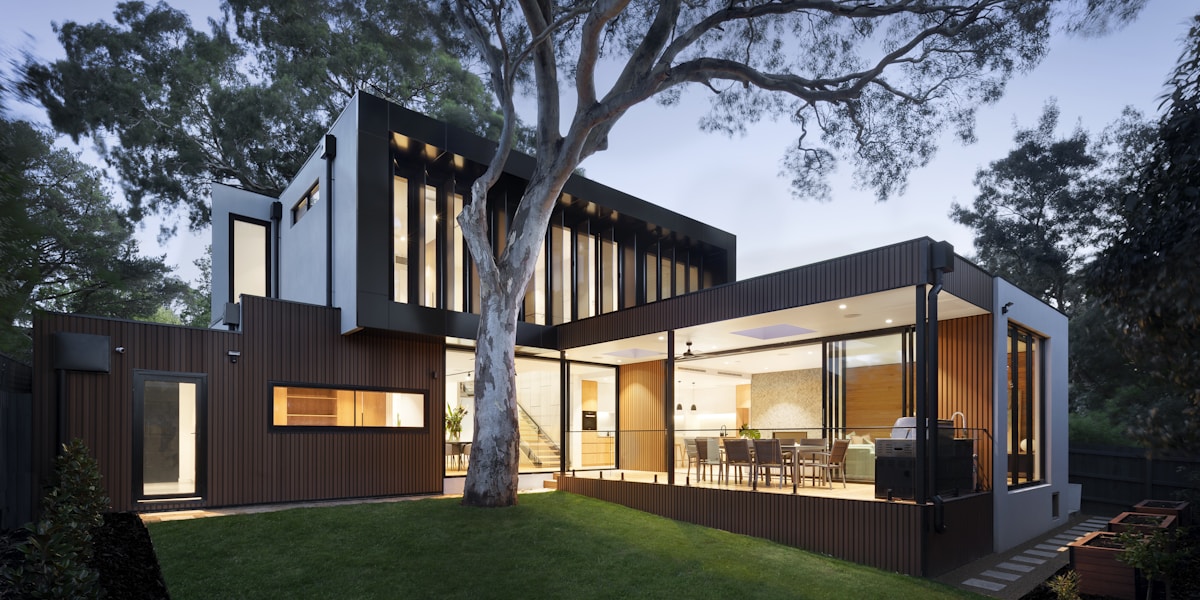
2-Story vs 1-Story Coastal ADU Design: How Height Affects Setbacks, Costs, and Coastal Commission Review in Pacific Beach
The 16-foot height threshold determines whether your Pacific Beach ADU qualifies for zero-foot setbacks or requires 4-foot side and rear setbacks. Two-story ADUs (typically 18-24 feet tall) trigger mandatory setback requirements that reduce buildable footprint by 20-33% on constrained coastal lots, while adding 15-25% to construction costs. This comprehensive guide analyzes the technical, financial, and regulatory factors that should drive your 1-story vs 2-story ADU decision in Pacific Beach's coastal zone.
When planning an accessory dwelling unit in Pacific Beach's coastal zone, one of the most critical design decisions you'll make is whether to build one story or two. This choice affects far more than aesthetics or interior layout. Under San Diego's current ADU regulations, building height directly determines your setback requirements: ADUs at 16 feet or under in height may qualify for zero-foot side and rear setbacks, while ADUs exceeding 16 feet—typically two-story structures—must observe minimum 4-foot side and rear yard setbacks when abutting residential properties.
On Pacific Beach's constrained lots averaging 5,000-7,500 square feet, this setback difference often determines project feasibility. Beyond setbacks, two-story ADUs add approximately 15-25% to construction costs compared to one-story designs, and Coastal Commission review may scrutinize taller structures more heavily for view obstruction and neighborhood compatibility.
This comprehensive guide breaks down the technical, financial, and regulatory factors that should drive your 1-story vs 2-story ADU decision in Pacific Beach, La Jolla, Mission Beach, and Bird Rock.
The 16-Foot Height Threshold: Zero Setbacks vs 4-Foot Setbacks Explained
California's ADU laws establish a critical height threshold at 16 feet. According to current San Diego regulations, detached ADUs at 16 feet or under may be constructed with zero-foot side and rear setbacks, allowing property owners to build right up to their side and rear property lines. This provision maximizes buildable area on tight coastal lots.
However, ADUs exceeding 16 feet in height must observe minimum 4-foot side and rear yard setbacks when abutting residential properties. Since typical two-story ADUs range from 18 to 24 feet in total height (accounting for first-floor ceiling height of 9-10 feet, second-floor framing, second-floor ceiling height, and roof structure), they almost always trigger the 4-foot setback requirement.
The practical impact is substantial. On a standard 50-foot-wide Pacific Beach lot, zero-foot side setbacks allow the full 50-foot width for your ADU footprint. With mandatory 4-foot setbacks on each side, your buildable width shrinks to 42 feet—a loss of 8 feet (16% reduction). When you account for front-to-back depth reductions as well, the total footprint loss can exceed 20% of your buildable area.
It's important to note that properties located in High or Very High Fire Hazard Severity Zones—including parts of Bird Rock with canyon adjacency—must observe minimum 4-foot side and rear setbacks for all ADUs regardless of height. Recent fire safety regulations implemented in February 2026 also require automatic sprinkler systems and stringent fire-resistant materials in these designated zones.
What Counts Toward the 16-Foot Height Limit
Building height for ADUs is measured from the grade at the front entrance to the highest point of the roof structure (excluding minor projections like chimneys or vents). For a one-story ADU to stay at or under 16 feet, you typically have room for 9-10 foot interior ceiling heights plus roof structure. This allows comfortable interior space while qualifying for zero-foot setbacks.
Two-story ADUs, even with modest 8-foot ceilings on both floors, quickly exceed 16 feet once you account for floor/ceiling assemblies (typically 12-18 inches between floors) and roof structure. A conservative two-story design with 8-foot ceilings on both floors, 18-inch floor assembly, and 4-foot roof pitch typically reaches 20-22 feet in total height—well above the 16-foot threshold.
Exceptions and Special Cases
San Diego allows detached ADUs up to 20 feet in height if the roof pitch matches the primary residence, and up to 18 feet if located within half a mile of a major transit stop. However, these height allowances don't change the setback trigger: exceeding 16 feet still requires 4-foot side and rear setbacks when abutting residential zones.
Properties in Pacific Beach's coastal zone may face additional height restrictions through the Local Coastal Program, particularly for lots with view corridor concerns, proximity to coastal bluffs, or other environmental sensitivity.
Buildable Area Math: How Setbacks Affect Small Lot Projects
Understanding the buildable area impact of setback requirements is essential for Pacific Beach property owners working with constrained lots. Let's examine the math using typical lot dimensions.
Consider a standard 5,000 square foot Pacific Beach residential lot measuring 50 feet wide by 100 feet deep. Assume the primary residence occupies the front 60 feet of the lot, leaving a 50-foot by 40-foot rear yard area (2,000 square feet) for potential ADU development.
Scenario A: One-Story ADU with Zero Setbacks (16 feet or under height)
With zero-foot side and rear setbacks, you can utilize the full 50-foot width. Assuming you need to maintain a 4-foot setback from the main house for fire separation and a 5-foot setback from the rear property line for yard access and utilities, your buildable footprint is:
50 feet wide × 31 feet deep = 1,550 square feet maximum footprint
For a one-story ADU, this 1,550 square foot footprint translates directly to 1,550 square feet of interior living space (before accounting for wall thickness). However, most Pacific Beach ADUs range from 800-1,200 square feet to optimize construction costs and rental potential, so you'd be building well within your maximum footprint.
Scenario B: Two-Story ADU with 4-Foot Setbacks (over 16 feet height)
With mandatory 4-foot side setbacks (8 feet total reduction in width) and 4-foot rear setback, your buildable footprint shrinks to:
42 feet wide × 27 feet deep = 1,134 square feet maximum footprint
This represents a 416 square foot footprint reduction (27% loss) compared to the zero-setback scenario. However, because you're building two stories, you can potentially achieve 2,268 square feet of total living space (1,134 sq ft × 2 floors).
The critical question becomes: do you need 2,268 square feet of ADU space? For most Pacific Beach rental ADU projects targeting the 800-1,200 square foot sweet spot, a two-story design means building 400-600 square feet per floor—creating a tall, narrow structure that may be less functionally efficient than a single-story footprint.
The Setback Loss Formula
You can calculate your setback area loss using this formula from building envelope calculators:
Setback Area Loss = (Lot Width × Side Setback × 2) + (Lot Depth × Rear Setback × 2) - (Side Setback × Rear Setback × 4)
For a 50' × 40' buildable area with 4-foot setbacks:
Setback Loss = (50 × 4 × 2) + (40 × 4 × 2) - (4 × 4 × 4) = 400 + 320 - 64 = 656 square feet lost to setbacks
On a 2,000 square foot rear yard, losing 656 square feet to setbacks represents a 33% reduction in buildable envelope—a substantial impact that often tips the design decision toward one-story with zero setbacks.
Cost Comparison: 15-25% Premium for 2-Story Construction
Two-story ADU construction in California costs between $275 and $375 per square foot, compared to $250 to $350 per square foot for single-story designs, according to GatherADU cost analysis. This 10-15% per-square-foot premium translates to 15-25% higher total project costs when you account for the additional square footage that two-story designs often incorporate.
For a typical 800 square foot ADU in Pacific Beach, here's the cost comparison:
One-Story 800 sq ft ADU: $250-$350/sq ft × 800 sq ft = $200,000-$280,000 construction cost
Two-Story 800 sq ft ADU (400 sq ft per floor): $275-$375/sq ft × 800 sq ft = $220,000-$300,000 construction cost
Cost premium for two-story design: $20,000-$20,000 (10% increase)
However, if you're building to maximize the footprint allowed by two-story construction—say, a 1,200 square foot two-story ADU:
Two-Story 1,200 sq ft ADU: $275-$375/sq ft × 1,200 sq ft = $330,000-$450,000 construction cost
Compared to the one-story 800 sq ft option, this represents a $130,000-$170,000 cost increase—not just from the two-story premium, but from the additional 400 square feet of space.
These construction cost figures don't include permit fees (typically $10,000-$21,000 for San Diego ADUs), Coastal Development Permits (adding $5,000-$15,000 for coastal zone properties), or utility connections, landscaping, and site work (potentially $30,000-$50,000 additional).
What Drives the Two-Story Cost Premium
Several specific construction elements drive the higher per-square-foot costs for two-story ADUs:
Staircase: A code-compliant interior staircase costs $5,000-$12,000 depending on design (straight run, L-shape, or spiral) and materials. This is a fixed cost that doesn't exist in single-story construction.
Second-Floor Framing: Floor joists, subfloor, and ceiling assembly between the first and second floors add approximately $15-$25 per square foot to second-floor construction costs.
Enhanced Foundation: While two-story ADUs have smaller foundation footprints than equivalent-square-footage single-story designs (potentially saving $4,000-$8,000), they require stronger foundation systems to support two-story loads, partially offsetting the footprint savings.
Scaffolding and Equipment: Two-story construction requires scaffolding for exterior work ($2,000-$5,000) and potentially crane rental for lifting trusses and materials to the second floor ($1,000-$3,000 per day).
Additional Exterior Wall Area: Two-story designs have more exterior wall surface area (perimeter × 20 feet vs perimeter × 10 feet), adding $4,000-$8,000 in material and labor costs.
Complex Roofing: Two-story ADUs often require more complex roof designs to match primary residence aesthetics or accommodate upper-floor ceiling pitch, increasing roofing costs by 15-20%.
When the Two-Story Premium Makes Financial Sense
Despite the 15-25% cost premium, two-story ADUs can make financial sense in specific scenarios:
Rental Income Optimization: If you need 1,000+ square feet to achieve target rental rates but your lot with 4-foot setbacks can only accommodate a 600 square foot single-story footprint, going vertical may be your only path to adequate rental income.
Resale Value: Two-story ADUs with separate bedrooms on different floors can command higher resale premiums by appealing to multi-generational living arrangements or live/work configurations.
View Access: In some coastal locations, a second-story ADU may capture ocean or bay views that justify premium rents ($3,500-$5,000/month vs $2,500-$3,500/month for non-view units), potentially recovering the construction premium through higher rental income.
Coastal Commission Review: When 2-Story ADUs Face Additional Scrutiny
All ADUs in Pacific Beach, La Jolla, Mission Beach, and Bird Rock fall within the California Coastal Zone, requiring Coastal Development Permits (CDPs) in addition to standard building permits. AB 462, which took effect October 15, 2025, streamlined coastal ADU permitting by mandating 60-day approval timelines and eliminating Coastal Commission appeals for qualifying projects.
However, two-story ADUs may face more intensive review than single-story designs, particularly regarding view impact and neighborhood compatibility. While the 60-day timeline applies to both one-story and two-story ADUs, the Coastal Commission and local planners evaluate taller structures more carefully for their potential to obstruct public coastal views and create visual mass incompatible with established neighborhood character.
Maintaining unobstructed ocean vistas is a top priority in coastal communities, as scenic views significantly impact property values and public coastal access experience. New structures like ADUs may be subject to height limitations or design requirements to prevent obstructing neighbors' views or public view corridors.
La Jolla's coastal zone extends further inland than Pacific Beach due to dramatic coastal bluffs and increased environmental sensitivity. The extensive coastal bluffs from La Jolla Shores to Bird Rock represent some of San Diego's most valuable real estate and some of its most geologically challenging development sites. In these areas, two-story ADU proposals may trigger view impact studies, particularly if neighboring properties have established view easements or if the ADU is visible from public viewpoints.
View Impact Analysis Requirements
While AB 462's 60-day timeline prevents indefinite delays, Coastal Development Permit applications for two-story ADUs should anticipate requests for:
View Corridor Documentation: Photographs from neighboring properties and public vantage points showing existing views and computer-generated renderings demonstrating the proposed ADU's visual impact.
Height Justification: Written explanation of why two-story design is necessary given lot constraints, with exploration of single-story alternatives.
Neighborhood Compatibility Analysis: Documentation showing how the proposed two-story ADU's height, mass, and design relate to surrounding structures in the immediate neighborhood.
Mitigation Measures: Design features that reduce visual impact, such as upper-floor stepbacks (reducing second-floor footprint by 2-4 feet from first-floor walls), lower rooflines on the coastal-facing side, or strategic window placement to avoid direct view blocking.
Properties in La Jolla's low-density single-family zones, particularly in Bird Rock and south La Jolla coastal areas, face the most rigorous neighborhood compatibility review for two-story ADUs.
Design Strategies to Minimize Coastal Review Risk
To streamline Coastal Development Permit approval for two-story ADUs, consider these design approaches:
Upper-Floor Stepback: Reduce the second-floor footprint by 2-4 feet on all sides, creating a stepped profile that reduces visual mass and shadow impact on neighboring properties.
Reduced Second-Floor Ceiling Height: Using 8-foot ceilings on the second floor (vs 9-10 feet on first floor) can shave 1-2 feet off total building height, potentially reducing view impact.
Coastal-Facing Roof Pitch: Design lower rooflines on the side facing the coast or primary view corridors, even if this creates asymmetrical design.
Match Primary Residence Height: Two-story ADUs that don't exceed the height of the primary residence are less likely to be flagged for view impact than ADUs that introduce new height to the property.
SB 1077 July 2026 Guidance
Senate Bill 1077 requires the California Coastal Commission to develop and publish comprehensive written guidance by July 1, 2026, clarifying ADU permitting requirements in the coastal zone. This guidance is expected to provide more specific criteria for when two-story ADUs require view impact analysis and what design standards satisfy neighborhood compatibility requirements.
Case Study: 5,000 Sq Ft Pacific Beach Lot Decision Matrix
Let's examine a real-world decision framework using a typical Pacific Beach property: a 5,000 square foot lot (50 feet wide × 100 feet deep) with a 1,500 square foot single-story primary residence occupying the front 60 feet. The rear 40 feet of the lot is available for ADU development.
Property Details:
- Buildable rear yard: 50' wide × 40' deep = 2,000 sq ft
- Not in High Fire Hazard Zone (zero setbacks allowed for ADUs ≤16 feet)
- Located in Coastal Zone (requires Coastal Development Permit)
- Primary residence is single-story, 14 feet tall
- Level lot with no significant slope
- Goal: Maximize rental income with 800-1,000 sq ft ADU
Option 1: One-Story ADU (16 feet or under) with Zero Side/Rear Setbacks
Buildable footprint: 50' wide × 31' deep (accounting for 4' separation from main house, 5' rear setback for access) = 1,550 sq ft maximum
Proposed design: 1,000 sq ft single-story ADU (well within maximum footprint)
- 2 bedrooms, 2 bathrooms
- Open-plan living/kitchen
- 10-foot ceilings throughout
- Total height: 15 feet 6 inches (qualifies for zero setbacks)
Construction cost: $275/sq ft × 1,000 sq ft = $275,000
Total project cost: $275,000 construction + $15,000 permits + $35,000 site/utilities = $325,000
Rental income potential: $2,800-$3,200/month (2BR/2BA Pacific Beach ADU)
Advantages: Lower construction costs, simpler permitting, efficient single-floor layout, maximum outdoor yard space retained
Disadvantages: No ocean views (single-story height), less privacy separation from main house
Option 2: Two-Story ADU (20 feet tall) with 4-Foot Setbacks
Buildable footprint: 42' wide × 27' deep (accounting for 4' side setbacks each side, 4' rear setback, 4' separation from main house) = 1,134 sq ft maximum
Proposed design: 1,000 sq ft two-story ADU (500 sq ft per floor)
- First floor: Living room, kitchen, 1 bathroom (500 sq ft)
- Second floor: 2 bedrooms, 1 bathroom (500 sq ft)
- 8-foot ceilings on both floors
- Total height: 20 feet
Construction cost: $320/sq ft × 1,000 sq ft = $320,000
Total project cost: $320,000 construction + $15,000 permits + $5,000 coastal premium + $35,000 site/utilities = $375,000
Rental income potential: $3,200-$3,800/month (potential ocean/bay views from second floor, separate sleeping level)
Advantages: Potential second-story views increase rental value, better privacy separation between living and sleeping areas, may capture premium renters
Disadvantages: $50,000 higher total project cost (15% premium), narrower footprint creates less efficient floor plan, potential Coastal Commission view impact review, introduces two-story height to previously single-story property
The Financial Analysis
Option 1 (One-Story) cash-on-cash return: $3,000/month average × 12 = $36,000 annual income ÷ $325,000 investment = 11.1% return
Option 2 (Two-Story) cash-on-cash return: $3,500/month average × 12 = $42,000 annual income ÷ $375,000 investment = 11.2% return
The returns are nearly identical, with Option 2's higher rental income offset by higher construction costs. The decision comes down to:
- View potential: If the second story genuinely captures desirable ocean or bay views, the rental premium may exceed $500/month, justifying the two-story premium.
- Lot geometry: The one-story option provides a more spacious 1,000 sq ft footprint vs a narrow 500 sq ft per floor two-story layout.
- Neighborhood compatibility: Since the primary residence is single-story, a two-story ADU may face Coastal Commission questions about neighborhood character.
- Risk tolerance: The one-story option has lower construction costs and simpler permitting, reducing project risk.
Recommendation for this property: Build the one-story ADU with zero setbacks. The 1,000 square foot footprint provides superior functionality compared to 500 square feet per floor, construction costs are $50,000 lower, and permitting risk is minimized. Unless a site visit confirms genuine ocean views from a second story that would command $4,000+ monthly rent, the two-story premium doesn't generate sufficient ROI to justify the additional cost and complexity.
Decision Framework: 1-Story vs 2-Story Selection Guide
Use this decision framework to determine whether a one-story or two-story ADU is right for your Pacific Beach, La Jolla, Mission Beach, or Bird Rock property.
Choose One-Story ADU (16 feet or under with zero setbacks) if:
- Your buildable rear yard is 1,500+ square feet with reasonable width-to-depth ratio
- You don't need more than 1,200 square feet of ADU space
- Your primary residence is single-story (neighborhood compatibility)
- You want to minimize construction costs and project complexity
- You prefer efficient single-floor living layouts
- Your property is NOT in High Fire Hazard Zone (zero setbacks allowed)
- Second-story height wouldn't capture meaningful views
Choose Two-Story ADU (over 16 feet with 4-foot setbacks) if:
- Your buildable footprint with 4-foot setbacks is less than 600 square feet
- You need 1,000+ square feet but have a narrow or shallow lot
- Second-story height would capture ocean, bay, or canyon views worth premium rent
- You're building multi-generational housing where separate floors provide privacy
- Your neighborhood has established two-story character (reduces Coastal Commission concern)
- The 15-25% cost premium is acceptable for your budget
- You want to maximize total square footage on a constrained lot
Red Flags for Two-Story ADUs:
- Property is in High or Very High Fire Hazard Zone (4-foot setbacks required regardless of height, eliminating the setback benefit of one-story)
- Your lot is in La Jolla or Bird Rock low-density coastal zone with established single-story character
- Neighboring properties have view easements or documented view corridors
- Your buildable footprint with 4-foot setbacks creates awkwardly narrow floor plates (less than 20 feet wide)
- Second story would make your ADU taller than the primary residence
- Budget constraints make the $45,000-$120,000 two-story premium prohibitive
Frequently Asked Questions
What is the maximum height for a 2-story ADU in Pacific Beach?
Two-story detached ADUs in Pacific Beach can be up to 24 feet in height under standard zoning. However, the critical threshold is 16 feet: ADUs at 16 feet or under qualify for zero-foot side and rear setbacks, while ADUs exceeding 16 feet must observe mandatory 4-foot side and rear setbacks when abutting residential properties. Properties in the Coastal Zone may face additional height restrictions based on view corridor protection and the Local Coastal Program. San Diego also allows ADUs up to 20 feet if the roof pitch matches the primary residence, though the 4-foot setback requirement still applies above 16 feet.
How does the 16-foot height threshold affect my buildable area on a Pacific Beach lot?
The 16-foot height threshold dramatically affects buildable footprint. ADUs at 16 feet or under can use zero-foot side and rear setbacks, allowing you to build to your property lines and maximize footprint. ADUs over 16 feet (typical 2-story designs) require 4-foot side and rear setbacks, reducing buildable width by 8 feet total (4 feet each side) and depth by 4+ feet. On a typical 50-foot-wide Pacific Beach lot, this reduces buildable width from 50 feet to 42 feet—a 16% reduction. When combined with depth reductions, the total footprint loss commonly exceeds 400-650 square feet (20-33% of buildable area). On a 5,000 square foot lot with 2,000 square foot rear yard, this difference often determines whether a project is feasible.
How much more does a 2-story ADU cost compared to 1-story in Pacific Beach?
Two-story ADUs cost 15-25% more than one-story designs in Pacific Beach. Per square foot, two-story construction runs $275-$375/sq ft compared to $250-$350/sq ft for single-story. For an 800 square foot ADU, the two-story premium adds approximately $20,000-$40,000 to construction costs alone. When accounting for total project costs including the staircase ($5,000-$12,000), scaffolding ($2,000-$5,000), potential Coastal Development Permit view studies (additional $3,000-$5,000), and other two-story-specific expenses, the total premium typically reaches $45,000-$120,000 depending on project size and complexity. The cost drivers include second-floor framing, interior staircase, enhanced foundation requirements, scaffolding for exterior work, additional exterior wall area, and more complex roofing systems.
Does the Coastal Commission review 2-story ADUs differently than 1-story in Pacific Beach?
Yes, the Coastal Commission and San Diego Development Services planners typically scrutinize two-story ADUs more carefully than single-story designs. While AB 462 (effective October 2025) requires 60-day Coastal Development Permit approval timelines for both one-story and two-story ADUs, taller structures face additional review for view obstruction and neighborhood compatibility, particularly in low-density single-family zones like parts of La Jolla and Bird Rock. Two-story ADUs may trigger requests for view corridor documentation, computer renderings showing visual impact from neighboring properties and public vantage points, height justification explaining why single-story isn't feasible, and mitigation measures like upper-floor stepbacks or reduced rooflines. Properties with established view easements or locations visible from public coastal viewpoints face the most intensive review. Senate Bill 1077 requires the Coastal Commission to publish comprehensive ADU guidance by July 1, 2026, which should clarify specific criteria for when two-story ADUs require view impact analysis.
Should I build a 1-story or 2-story ADU on my 5,000 sq ft Pacific Beach lot?
For most 5,000 square foot Pacific Beach lots, a one-story ADU with zero-foot setbacks is the better choice. On a typical 50' × 100' lot with 2,000 square foot rear yard, zero setbacks allow a 1,550 square foot maximum footprint—more than sufficient for an 800-1,200 square foot ADU. This provides superior functionality compared to a two-story design limited to a 1,134 square foot footprint (requiring narrow 500-600 sq ft floors to reach the same total square footage). One-story construction costs $45,000-$50,000 less, avoids potential Coastal Commission view scrutiny, and creates more efficient single-floor layouts. Choose two-story only if: (1) the second story would capture genuine ocean/bay views worth $500+/month rent premium, (2) you need 1,200+ square feet and your lot geometry makes single-story infeasible, (3) you're building multi-generational housing where floor separation provides critical privacy, or (4) your property is in a High Fire Hazard Zone where 4-foot setbacks are required regardless of height (eliminating the one-story setback advantage).
Can I avoid the 4-foot setback requirement for a 2-story ADU in Pacific Beach?
No, you cannot avoid the 4-foot setback requirement if your ADU exceeds 16 feet in height. San Diego Municipal Code requires that ADUs over 16 feet in height must observe minimum 4-foot side and rear yard setbacks when abutting residential properties. The only way to qualify for zero-foot side and rear setbacks is to keep total ADU height at 16 feet or below, which typically limits designs to one story with 9-10 foot ceilings plus roof structure. Even ADUs built to 18 feet (allowed near transit) or 20 feet (allowed with matching roof pitch) must still observe 4-foot setbacks. Additionally, properties in High or Very High Fire Hazard Severity Zones must maintain 4-foot setbacks for all ADUs regardless of height, per February 2026 fire safety regulations. There are no variances or exceptions to these setback requirements for standard residential lots.
How do I calculate maximum buildable square footage for a 1-story vs 2-story ADU on my lot?
Use this calculation method: First, determine your rear yard dimensions (total lot depth minus primary residence depth). Then apply setbacks: For 1-story (≤16 feet): Buildable width = lot width minus 0 feet (zero side setbacks allowed). Buildable depth = rear yard depth minus front separation from main house (typically 4 feet for fire code) minus rear setback for access/utilities (typically 5 feet). Multiply width × depth = maximum footprint. For 2-story (>16 feet): Buildable width = lot width minus 8 feet (4-foot setback each side). Buildable depth = rear yard depth minus front separation (4 feet) minus rear setback (4 feet minimum, plus 5 feet for access). Multiply width × depth = maximum footprint per floor, then multiply by 2 for total two-story square footage. Example: 50' × 100' lot with 40-foot rear yard. One-story: 50' wide × 31' deep = 1,550 sq ft max. Two-story: 42' wide × 27' deep = 1,134 sq ft per floor × 2 = 2,268 sq ft total max. Note: Properties in Fire Hazard Zones use 4-foot setbacks for both scenarios.
What are the typical ceiling heights for staying under the 16-foot threshold?
To stay at or under 16 feet total height and qualify for zero-foot setbacks, one-story ADUs typically use 9-10 foot interior ceiling heights. This allows comfortable, code-compliant living space while staying within the 16-foot limit. Building height is measured from grade at the front entrance to the highest point of the roof (excluding minor projections). A typical breakdown: 10-foot interior ceiling + 12-inch floor assembly/foundation + 4-5 feet of roof structure (for a modest pitched roof) = approximately 15.5-16 feet total. Vaulted ceilings following the roof pitch can provide even more interior volume while staying under 16 feet external height. If you use 8-foot ceilings, you have more room for roof pitch or can reduce total height to 14-15 feet, providing extra margin below the 16-foot threshold. Avoid designs that push to exactly 16 feet—inspectors measure actual constructed height, and exceeding 16 feet by even a few inches would trigger the 4-foot setback requirement and potential code violations.
Do Fire Hazard Zone requirements in Bird Rock change the 1-story vs 2-story decision?
Yes, Fire Hazard Zone designation significantly changes the decision calculus. Properties in High or Very High Fire Hazard Severity Zones—including parts of Bird Rock with canyon adjacency—must observe minimum 4-foot side and rear setbacks for all ADUs regardless of height, per February 2026 fire safety regulations. This eliminates the primary advantage of one-story construction (zero-foot setbacks). When both one-story and two-story designs require 4-foot setbacks, the decision shifts to cost and functionality: two-story allows you to maximize square footage on the reduced footprint, but at a 15-25% construction cost premium. On constrained Fire Hazard Zone lots, two-story construction may be the only way to achieve adequate ADU size given the mandatory setbacks. However, these properties also require automatic sprinkler systems and stringent fire-resistant materials, adding $8,000-$15,000 to total project costs regardless of whether you build one story or two. Verify your property's Fire Hazard Severity Zone designation with San Diego Development Services before finalizing your ADU design.
Will a 2-story ADU affect my property's resale value differently than a 1-story?
Two-story ADUs can potentially increase resale value more than one-story designs if they provide functional advantages that buyers value: separate bedroom and living floors for multi-generational housing, ocean or bay views from the second story that command rental premiums, or significantly more total square footage (1,200+ sq ft vs 800 sq ft). However, this premium depends on market conditions and buyer preferences. Some buyers prefer single-story ADUs for easier aging-in-place, lower maintenance costs, and simpler layouts. The key is whether the two-story design genuinely enhances functionality and rental income. A well-designed 1,000 square foot one-story ADU may have similar or higher resale impact as a poorly laid-out 1,000 square foot two-story ADU with narrow floor plates. The construction cost premium ($45,000-$120,000) should be recoverable through increased property value, but this isn't guaranteed—particularly if neighborhood character is predominantly single-story or if the two-story design creates Coastal Commission concerns that future buyers must navigate when making modifications. Focus on optimizing rental income and functionality rather than assuming two-story automatically means higher resale value.
Sources & References
All information verified from official sources as of June 2026.
- ▪ Pacific Beach ADU Regulations - Better Place Design & Build (research source)
- ▪
- ▪
- ▪
- ▪
- ▪
- ▪
- ▪ Can You Build an ADU in a Coastal Zone? - GatherADU (research source)
- ▪ La Jolla ADU Regulations - Better Place Design & Build (research source)
- ▪ SB 1077: Coastal ADU Guidance Due July 1, 2026 - Pacific Beach Builder (research source)
- ▪
- ▪
Expert Coastal ADU Design & Development
Pacific Beach Builder specializes in 1-story and 2-story coastal ADU design, setback optimization, height compliance analysis, and Coastal Commission navigation. Whether you need buildable area calculations, cost-benefit analysis, or comprehensive design services, we provide expert guidance from initial feasibility through final occupancy.
Licensed General Contractor CA #XXXXXX | Coastal ADU Specialists | Pacific Beach & San Diego ADU Experts